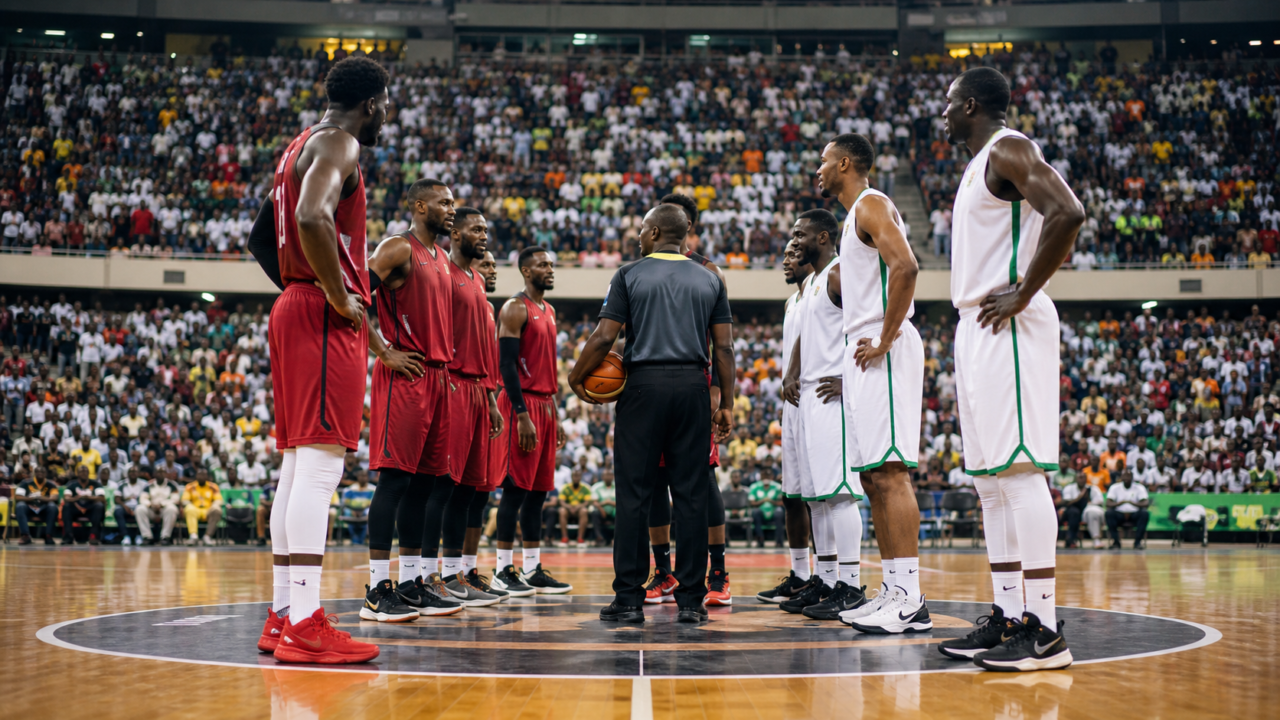
Senegal, Côte d’Ivoire and Mali enter the next FIBA Basketball World Cup qualifying window tied at 5-1, giving Group F a three-team lead and a clear competitive edge when play resumes in Dakar on 27 August. Angola follow at 4-2, with Egypt at 3-3 and DR Congo at 2-4.
FIBA selected Dakar Arena to host the Group F games from 27 to 30 August. The second-round format carries first-round records forward and adds games against the teams that advanced from the other group, so the leading trio begin with an advantage but no protection from a poor window.
Three leaders, one narrow margin
Senegal, Côte d’Ivoire and Mali have each lost only once. Their identical records make the opening order less important than the opportunity ahead: wins against new opponents can create the first meaningful separation among the leaders.
Senegal carry the benefit and responsibility of playing at home. Dakar Arena can provide energy, but it also raises expectations for a team that has already established a strong position. The hosts must manage that pressure across multiple games rather than depend on one emotional performance.
Côte d’Ivoire and Mali arrive with equally strong records and no reason to accept a supporting role. Both have shown that they can build results across a qualifying window, and both now have the chance to gain ground away from home against direct rivals.
Angola remain close enough to change the race
Angola’s 4-2 record places the former African champions one win behind the leaders. That is close enough to make the Dakar window an opportunity rather than a recovery mission. A strong sequence could move Angola into the top cluster before the final qualifying stage.
Egypt begin at 3-3 and need greater consistency, while DR Congo face the steepest task at 2-4. Neither side is eliminated, but the margin for error is smaller. Each must take results from teams above them while avoiding the kind of late-game losses that become costly when all previous records are retained.
The wider stakes are significant. Africa has five places at the 2027 World Cup, and the second round brings the strongest surviving teams into direct competition. Africa Sports Live’s overview of the Window 4 host cities explains why Dakar and Radès will shape the next phase of the continental race.
What to watch from 27 August
The first issue will be how quickly teams adapt to unfamiliar opponents. The merged group rewards preparation because tendencies learned in the first round do not automatically apply. Defensive communication and half-court execution will be tested immediately.
Depth will also matter. A condensed window can expose teams that rely too heavily on a small rotation. Bench minutes, rebounding and control of turnovers often determine whether a contender can repeat its best level across several games.
Dakar begins with Senegal, Côte d’Ivoire and Mali together at the front, but the table remains open enough for Angola to intervene and for Egypt or DR Congo to recover. By the end of the window, Group F should offer a clearer picture of which teams are ready to carry Africa’s challenge toward Qatar.