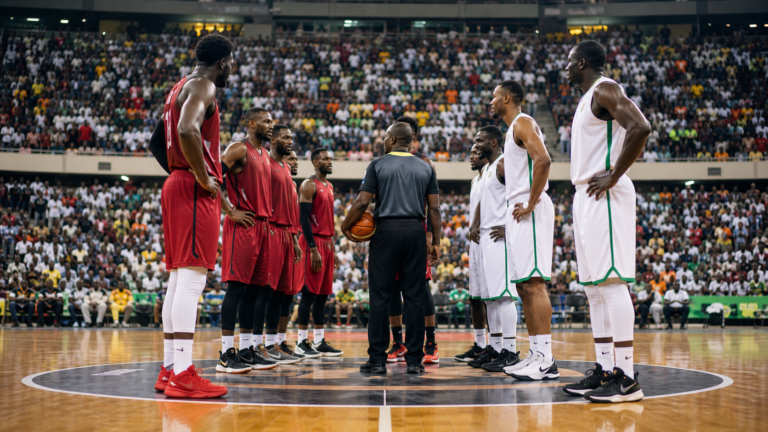
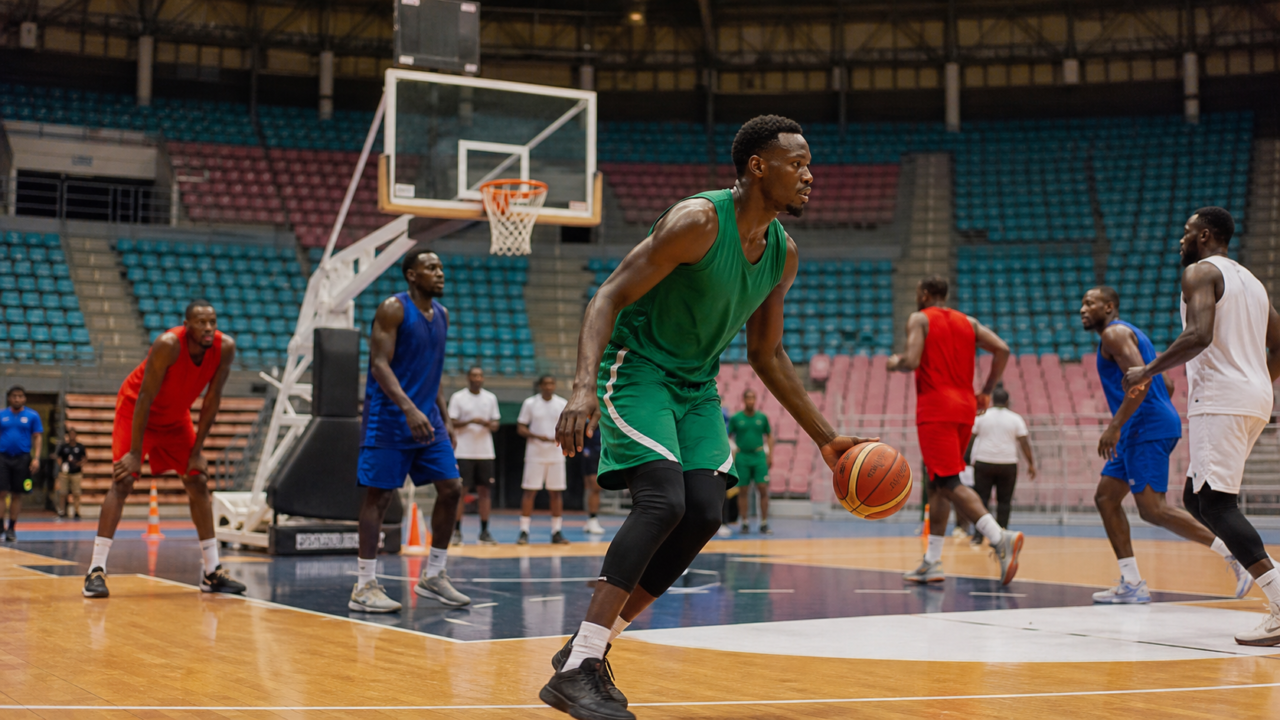
The African qualifiers for the 2027 FIBA Basketball World Cup move into their second round on 27 August, with Group E bringing six closely matched national teams to Radès, Tunisia. Cameroon lead the group at 5-1, while Guinea, Tunisia, Nigeria and South Sudan all begin the window at 4-2. Cape Verde remain firmly involved at 3-3.
FIBA confirmed that the Salle Multidisciplinaire de Radès will host the Group E games from 27 to 30 August. The standings carried forward from the first round mean there is no reset: every earlier result still counts, and a single win can quickly change the order in one of Africa’s most balanced qualifying groups.
Why Group E starts without a clear favourite
Cameroon’s 5-1 record provides an advantage, but not a comfortable one. Four teams sit only one victory behind, and Cape Verde are two wins from the leaders. That compression makes point difference, game management and recovery between fixtures especially important.
Guinea and Tunisia arrive with the same 4-2 mark as Nigeria and South Sudan, but each team reached this stage through a different first-round group. The second round introduces opponents they have not yet faced while preserving results against the teams that advanced with them.
That structure rewards consistency. A team cannot erase an early defeat, but it can strengthen its position by winning against the three new opponents in the merged group. It also discourages short-term calculations because every possession may matter when the final standings are decided.
Radès offers Tunisia a home opportunity
Tunisia will play the window in familiar surroundings, an advantage that can matter in a schedule involving several games over four days. Home support and reduced travel should help, but the hosts still face the same technical challenge as the other contenders: producing reliable offence against teams with different physical profiles.
For Nigeria, the window is an opportunity to turn a competitive first-round record into a stronger qualification position. South Sudan bring recent experience at the highest international level, while Cameroon and Guinea have already shown they can protect results across a qualifying window. Cape Verde’s 3-3 record leaves less room for error but keeps the island nation within reach of the leading group.
Africa Sports Live introduced the two host cities in its guide to the Dakar and Radès qualifying window. Group E now provides the sharper sporting question: which team can emerge from four days of direct pressure with control of the race?
What the window can decide
The African qualifying competition will ultimately send five teams to the 2027 World Cup in Qatar. Window 4 will not settle every place, but it can create separation before the final phase. A successful run in Radès could move a contender from the middle of the group into a position where qualification is in its own hands.
Coaches must balance urgency with the demands of the schedule. Rotations, foul management and late-game execution become decisive when recovery time is limited. Teams that avoid long scoring droughts and protect the ball will give themselves the best chance of building momentum.
Group E begins with six live contenders and no safe result. That is precisely why Radès may become one of the defining stages of Africa’s road to Qatar 2027.