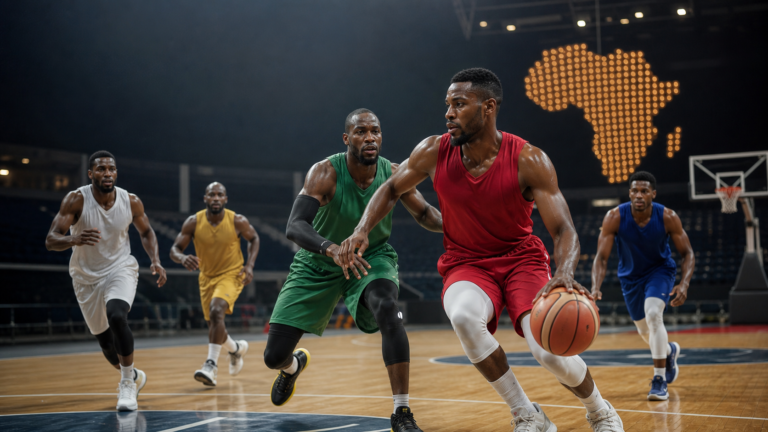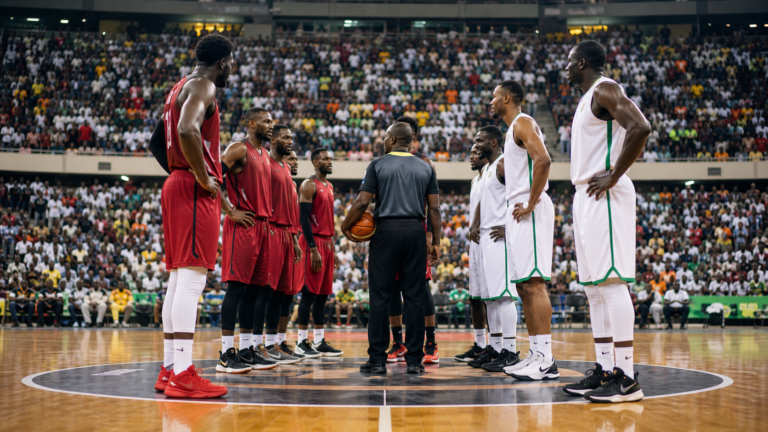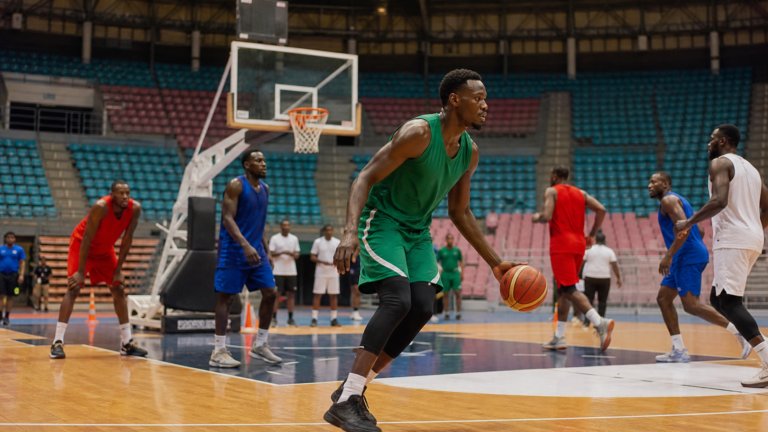
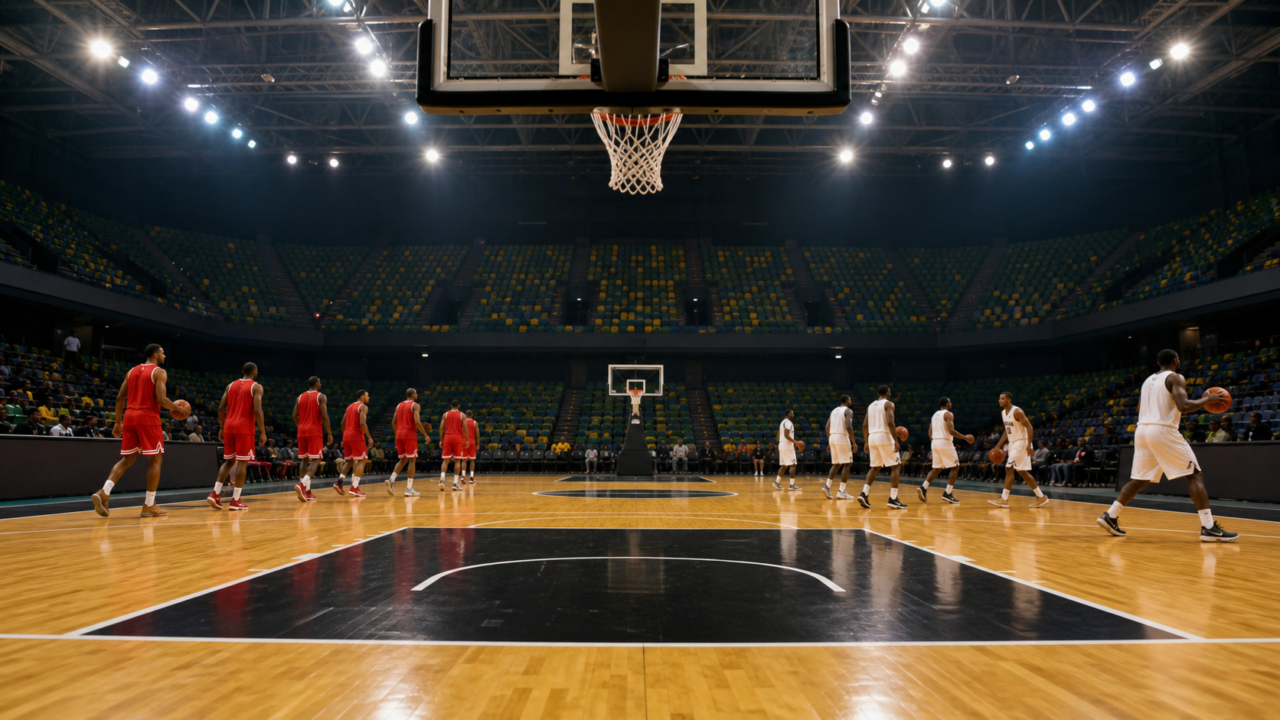
Dakar and Radès will host the fourth window of the FIBA Basketball World Cup 2027 African Qualifiers from 27–30 August, bringing all 12 remaining teams into the decisive second round.
FIBA Africa has confirmed that Tunisia will stage Group E at the Salle Multidisciplinaire de Radès, while Senegal will host Group F at Dakar Arena. The two venues will share 18 games across four days as the race for Africa’s five places at the World Cup intensifies.
Two hosts, one qualifying race
The second round combines the leading teams from the opening phase into two six-team groups. Results from the first round are carried forward, meaning no team begins the August window with a clean slate.
Group E features Cameroon, Guinea, Tunisia, Nigeria, South Sudan and Cape Verde. FIBA lists Cameroon at 5-1 entering the window, followed by Guinea, Tunisia, Nigeria and South Sudan at 4-2, with Cape Verde at 3-3.
Group F contains Senegal, Côte d’Ivoire, Mali, Angola, Egypt and the Democratic Republic of Congo. Senegal, Côte d’Ivoire and Mali enter at 5-1, Angola at 4-2, Egypt at 3-3 and DR Congo at 2-4.
Those records create a compressed race in both groups. One strong weekend can move a team toward the automatic qualifying positions, while a poor sequence can make the final window in February 2027 far more difficult.
Why Dakar and Radès matter
Both venues are familiar settings for high-level African basketball. Radès has repeatedly hosted continental competitions and qualifiers, while Dakar Arena offers Senegal a home platform during a window in which every result carries forward to the final standings.
Hosting is not a guarantee of success, but it can affect preparation. Tunisia and Senegal can work without international travel immediately before their games, train in familiar surroundings and draw energy from local supporters.
The wider significance is logistical as well as sporting. Staging all Group E games in Tunisia and all Group F games in Senegal allows FIBA to concentrate teams, officials and broadcast operations in two established venues. It also gives supporters in North and West Africa a direct opportunity to watch the qualifying race.
Africa Sports Live previously examined how Africa’s World Cup qualifiers enter the August window. The confirmation of Dakar and Radès now gives that next phase a clear geography and a complete schedule.
Fixtures that will shape the standings
The window opens on 27 August. In Radès, Guinea face South Sudan, Nigeria meet Cameroon and Tunisia play Cape Verde. In Dakar, Angola face DR Congo, Mali meet Côte d’Ivoire and Egypt take on Senegal.
Further games follow on 28, 29 and 30 August. Because teams face opponents carried over from the other first-round group, the window introduces matchups that did not take place earlier in qualification.
The format rewards consistency. Africa has five World Cup places available: the top two teams in each second-round group and the best third-placed team across the groups will qualify for Qatar 2027. Every carried result and every new game therefore contributes to the final comparison.
That makes point difference, defensive execution and late-game management important alongside wins and losses. Teams that remain composed in close finishes may protect not only their group position but also their standing in the cross-group race for the fifth ticket.
What happens next
National federations will now move through the final stages of squad preparation before teams assemble in Tunisia and Senegal. Official rosters and any late personnel updates should be confirmed through FIBA and the relevant federations rather than speculation.
After the 27–30 August games, the standings will provide a much clearer picture of the qualification race. The fifth and final window is scheduled for 22 February to 2 March 2027, and FIBA says its host venues will be announced later.
For now, the immediate focus is on Dakar and Radès. Eighteen games in four days will not settle every place, but they will determine which teams enter the final window in control of their route to Qatar and which will need results elsewhere to keep their hopes alive.
Sources: FIBA Africa host announcement and the official African Qualifiers competition page.