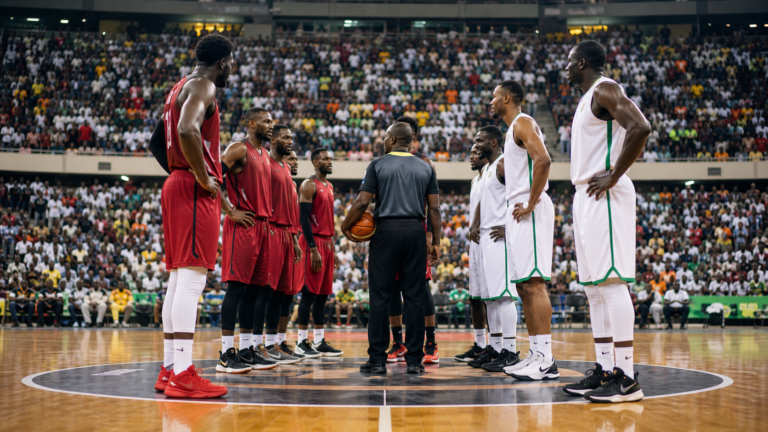
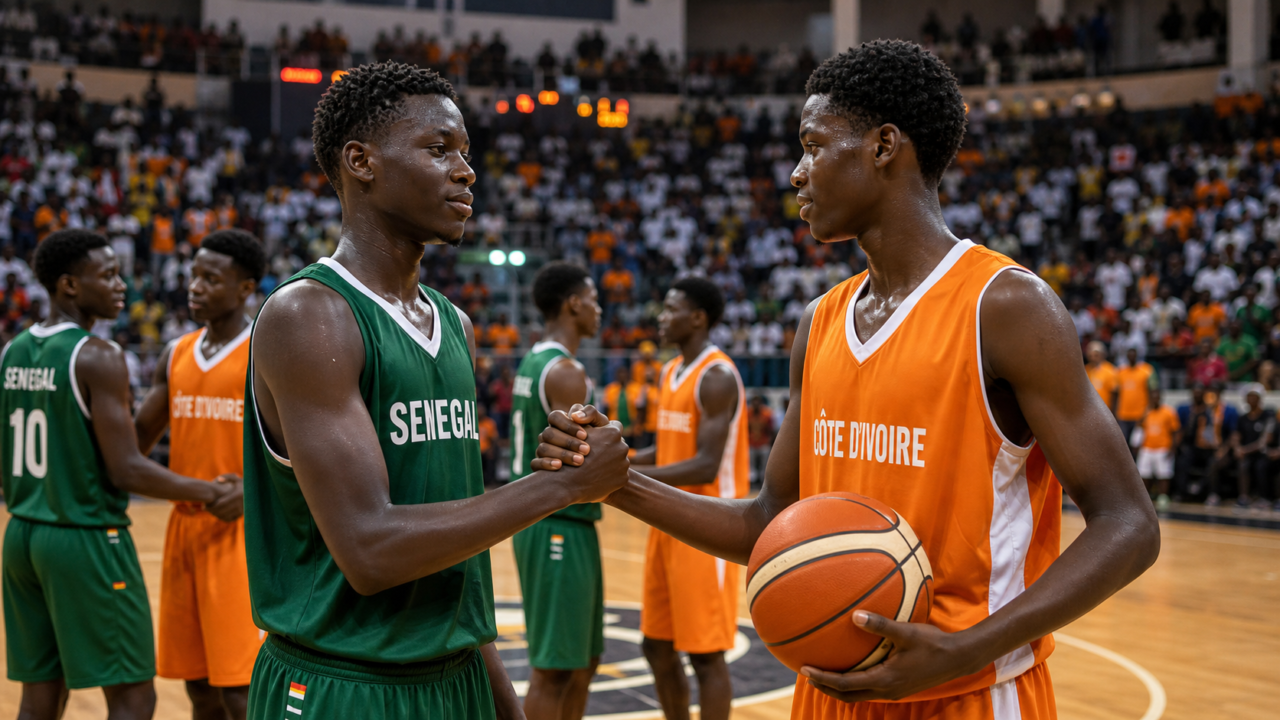
Senegal and Côte d’Ivoire have secured Africa’s two places at the 2027 FIBA U19 Basketball World Cup after reaching the final of the 2026 FIBA U18 AfroBasket in Abidjan. Their qualification is the clearest reward from a demanding continental tournament that brought together 12 national teams from across Africa.
FIBA confirmed before the competition that the winner and runner-up would advance to the global event. By surviving the group phase and knockout rounds and reaching Sunday’s title game, Senegal and the host nation completed that objective before the final ball was thrown up.
Two different routes to the same destination
Senegal arrived in Abidjan with a strong tradition in African youth basketball and the expectation of challenging deep into the tournament. Côte d’Ivoire carried the additional pressure of playing at home, where every round brought more attention and a growing sense of opportunity.
The final pairing gave the competition a distinctly West African conclusion. It also guaranteed that the region would supply both of Africa’s representatives at the next U19 World Cup. That matters because the global tournament is not only a championship; it is one of the most important evaluation stages for players approaching senior basketball.
The decisive weekend followed a semi-final stage in which every possession carried qualification weight. Africa Sports Live previewed that pressure in its report on Senegal’s World Cup-deciding semi-final. Reaching the final converted that pressure into a confirmed international place.
Why qualification matters beyond the medal table
A place at the U19 World Cup gives players and coaching staffs a year-long target. It creates a reason for federations to keep the group together, arrange preparation camps and seek stronger opposition. It also gives young athletes a global stage on which their decision-making, physical development and ability to adapt can be measured against leading programmes from other regions.
For Senegal, the ticket reinforces a national pathway that has consistently produced competitive youth teams. The next challenge is to turn continental success into a more complete global performance, using the period before the World Cup to broaden the rotation and improve execution against different styles.
For Côte d’Ivoire, qualification at home can have an additional impact. A successful host team gives local supporters a direct connection to the tournament and can strengthen interest in youth development beyond the final. The federation now has an opportunity to use the World Cup place as a platform for sustained investment rather than a one-week celebration.
What happens next
The immediate focus will shift from continental competition to planning for 2027. Player availability will evolve as athletes move between school, academy and club environments, so continuity will be important. Both teams will also need to identify the areas that can be improved before facing opponents with greater size, pace or international experience.
FIBA’s U18 competition has done its primary job: it has identified Africa’s finalists and World Cup representatives. The development test begins now. Senegal and Côte d’Ivoire must use the months ahead to ensure that qualification becomes a foundation for progress at senior level.
Whatever the final standings in Abidjan, both teams leave the tournament with the most valuable long-term prize available. Africa will be represented at the 2027 U19 World Cup by two programmes that earned their places under knockout pressure and now have time to prepare for a larger stage.