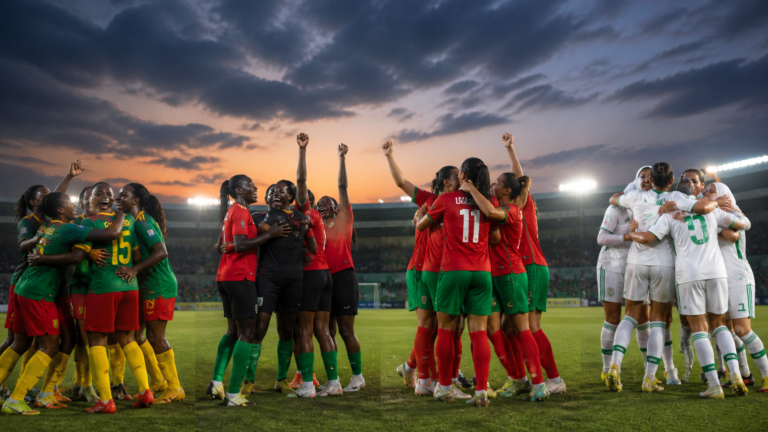
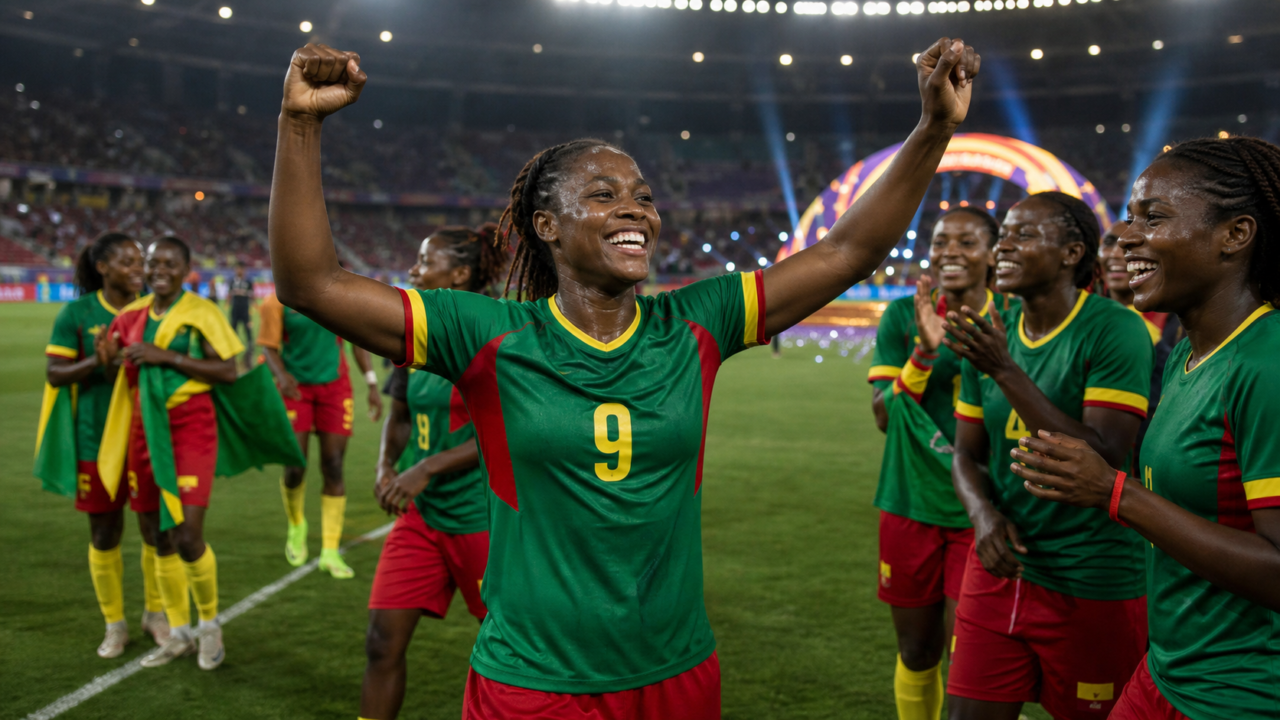
Cameroon are champions of Africa for the first time after defeating Malawi 3-0 in the 2026 Women’s Africa Cup of Nations final in Rabat on Sunday. Marie Ngah scored twice and Naomi Ndjoah Eto added the other goal as the Indomitable Lionesses turned a dominant first half into a landmark night for the country’s women’s game.
The result completed a campaign built on resilience and steady improvement. Cameroon had reached three previous WAFCON finals without lifting the trophy, including defeats in 2004, 2014 and 2016. This time, they took control of the decisive match early enough to leave Malawi chasing a contest that had moved sharply in Cameroon’s direction.
A final settled by Cameroon’s first-half authority
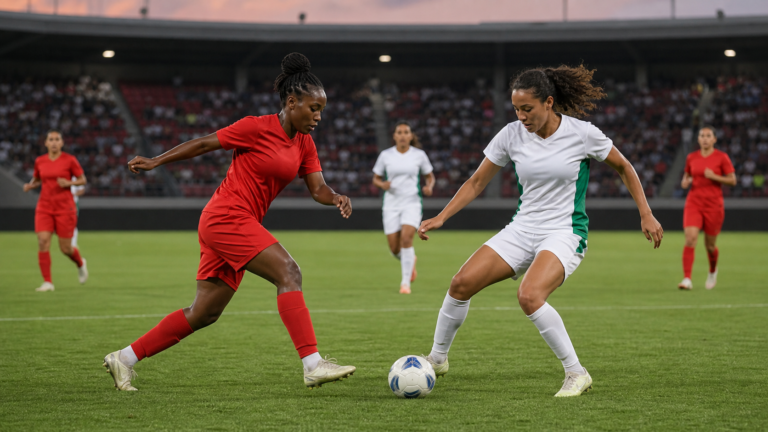
Ngah opened the scoring in first-half stoppage time before Ndjoah Eto extended Cameroon’s advantage. Ngah struck again to complete the 3-0 victory and give the Indomitable Lionesses the clearest possible finish to a historic tournament.
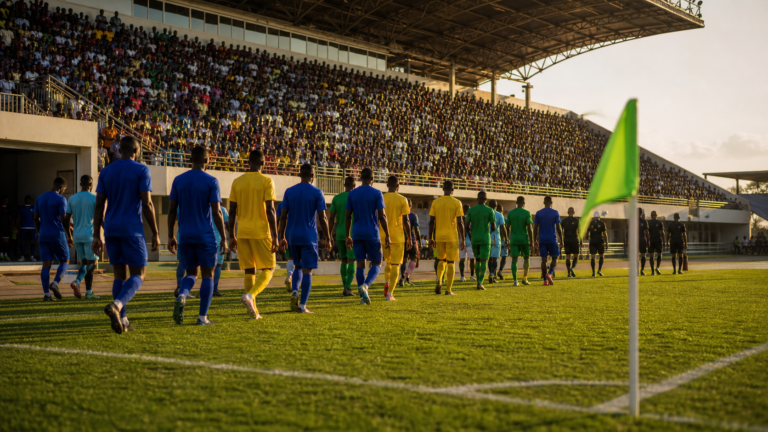
Cameroon’s success was not only about the goals. The team managed the occasion with discipline, protected its advantage and denied Malawi the space that had powered the debutants through one of the tournament’s most remarkable runs. The final was played at the Moulay El Hassan Stadium in Rabat, the venue selected by CAF for the conclusion of the expanded 16-team competition.
The title also gives a fitting conclusion to a route that had already carried Cameroon past hosts Morocco in the semi-finals. Africa Sports Live had followed the build-up in its preview of the Cameroon–Malawi final, when both teams were chasing very different kinds of history.
Why the first title matters
Cameroon have long been one of Africa’s established women’s national teams, but the continental trophy had remained out of reach. Ending that sequence changes the way this generation will be remembered. It also places Cameroon alongside the small group of nations to have won Africa’s leading women’s international competition.
The breakthrough arrives at an important moment for the women’s game on the continent. The 2026 tournament expanded to 16 teams, offered a record prize of US$1 million to the champions and doubled as part of Africa’s pathway toward the 2027 FIFA Women’s World Cup. Cameroon’s victory therefore carries sporting, financial and developmental value.
For Malawi, defeat does not erase an exceptional debut. The Scorchers reached the final after emerging from a difficult group and navigating the knockout rounds with confidence. Their progress showed how quickly the competitive map can change when new teams receive a genuine place on the continental stage.
What comes next for both finalists
Cameroon can now build toward the next international cycle with a title-winning core and the confidence that comes from finally converting repeated deep tournament runs into a championship. The immediate task will be to carry that standard into World Cup preparation and make the continental success sustainable rather than isolated.
Malawi leave Morocco with proof that their rise is real. The challenge for the federation will be to protect the momentum created by this run: secure high-level fixtures, strengthen the domestic pathway and give the players the preparation required for the next stage of international competition.
For African women’s football more broadly, the final delivered two powerful messages. Cameroon showed the value of persistence, while Malawi showed that an expanded field can create space for a newcomer to compete immediately. The trophy belongs to Cameroon, but the tournament’s wider legacy reaches well beyond one winning team.