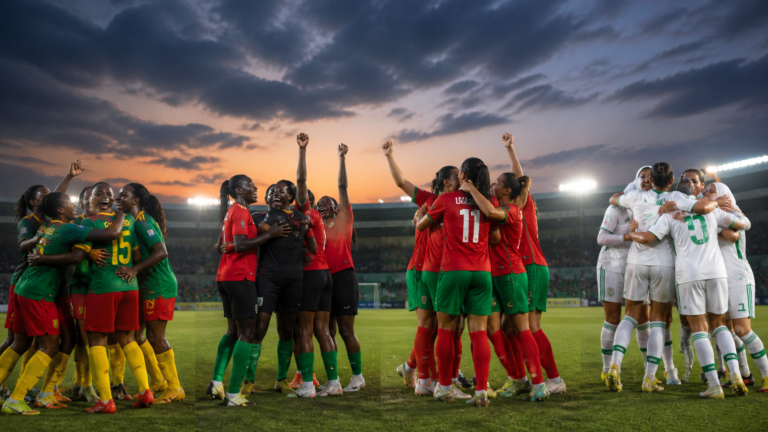
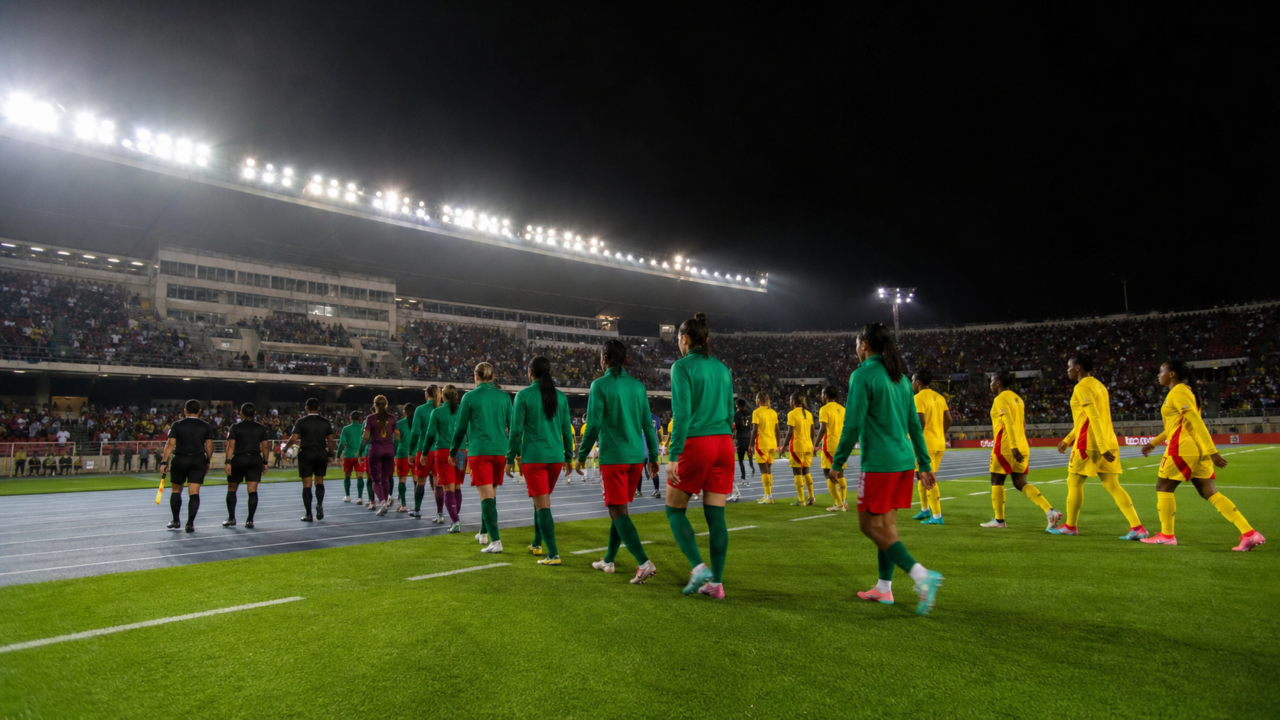
Cameroon and Malawi are set to meet in the final of the 2026 Women’s Africa Cup of Nations in Rabat on 16 August, closing a tournament that has paired one of African women’s football’s established contenders with a national team enjoying a landmark debut campaign.
The final is the last fixture on the official CAF schedule for the Morocco tournament, which began on 26 July. Both teams reached the championship match through the semi-finals and, by advancing to the last four, also secured direct qualification for the 2027 FIFA Women’s World Cup in Brazil.
A final built around two different journeys
Cameroon arrive with the weight of experience. The Indomitable Lionesses have spent years among Africa’s leading women’s national teams and understand the demands of the knockout stage. Their route to Rabat has again highlighted the value of tournament control, defensive concentration and the ability to manage decisive moments.
Malawi’s story is different. The Scorchers qualified for the Women’s Africa Cup of Nations for the first time after defeating Angola over two legs in the qualifying campaign. Reaching the final at their first appearance has turned an already historic qualification into one of the most significant runs in the competition’s recent history.
That contrast gives the final a clear sporting tension. Cameroon are pursuing a continental breakthrough after repeatedly competing deep into major African tournaments. Malawi are attempting to complete an extraordinary first WAFCON with the trophy, having already changed expectations around what emerging women’s national teams can achieve.
Why Malawi’s run matters beyond one tournament
Malawi’s progress is important because it shows how quickly the competitive map can expand when women’s programmes receive a sustained pathway into regional and continental football. Qualification created a first opportunity; the team’s performance in Morocco has shown that participation did not have to be the limit.
The run should also carry value after the final. A first World Cup qualification brings a longer preparation cycle, greater visibility and a stronger case for investment in domestic structures. The immediate focus is Rabat, but the consequences will extend into the build-up to Brazil 2027.
For readers following the tournament from the knockout phase, our earlier WAFCON semi-final guide outlined how the competition moved into its decisive week. The finalists have now converted that opportunity into a place on African football’s biggest women’s stage.
Cameroon’s opportunity to turn experience into a title
Cameroon’s challenge is to make their greater tournament familiarity count without allowing the occasion to become predictable. A final against a confident debutant demands patience as well as authority. The Indomitable Lionesses will need to set the rhythm, protect against transitions and avoid giving Malawi the kind of emotional momentum that has powered their campaign.
The match also offers Cameroon a chance to frame their World Cup qualification with a continental title. The route to Brazil is already secure, but lifting the trophy would provide a stronger platform for the next phase of preparation and reinforce the team’s status among Africa’s leading sides.
What happens next in Rabat
The final will be played in Rabat on Sunday, 16 August. The setting and stakes are confirmed; the remaining question is which team can best manage the last step of a demanding three-week tournament.
Whatever the result, the matchup has already delivered two powerful outcomes for African women’s football: Cameroon have returned to the competition’s defining stage, while Malawi have transformed a first qualification into a place in the final and a ticket to the World Cup. Rabat will decide the champion, but both teams will leave Morocco with a significant next chapter ahead.