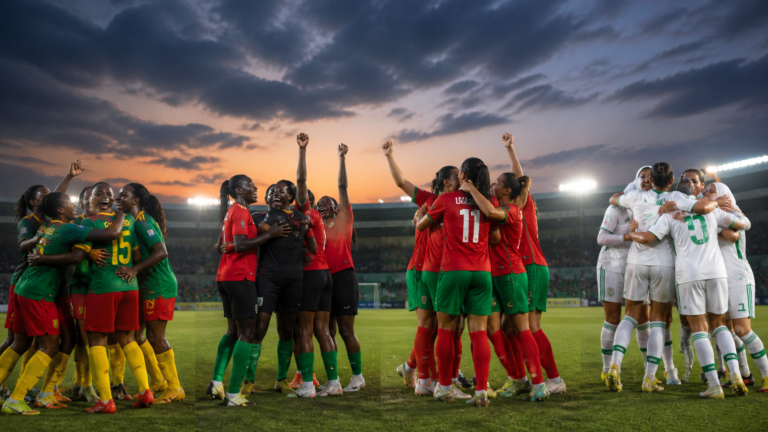
The 2026 Women’s Africa Cup of Nations enters a decisive World Cup qualification phase on 13 August, when the teams eliminated in the quarter-finals compete for Africa’s two places in the inter-confederation play-off route to Brazil 2027.
The matches in Casablanca give four national teams another opportunity after missing direct qualification. CAF’s competition format awards automatic Women’s World Cup places to the four WAFCON semi-finalists, while the play-off winners continue toward the global tournament through an additional international stage.
A second qualification route after the quarter-finals
Reaching the WAFCON semi-finals carries two rewards: a place in the continental title race and direct qualification for the 2027 FIFA Women’s World Cup in Brazil. For the quarter-final losers, however, elimination from the trophy competition does not immediately end the World Cup campaign.
CAF scheduled the additional matches for Thursday, 13 August in Casablanca. The two winners will become Africa’s representatives in the inter-confederation play-offs, where the remaining World Cup places will be decided against teams from other regions.
The distinction is important. Winning in Casablanca does not itself guarantee a place at the World Cup. It secures entry to the next qualifying stage, so the successful teams will still need to navigate the FIFA play-off process.
Why the turnaround is so demanding
The play-offs arrive only days after the quarter-finals. Teams must recover physically and mentally from a major knockout defeat, review what went wrong and prepare for another high-pressure match with little time on the training field.
That short turnaround places a premium on squad depth. Coaches may need to manage fatigue, assess knocks and decide whether to retain the same tactical structure or make changes. No injury or availability assumption should be made until the national teams release official updates.
The psychological challenge is just as significant. Players have to shift quickly from disappointment in the continental competition to the opportunity of keeping a World Cup campaign alive. The teams that handle that transition best may gain an advantage before the first whistle.
What is at stake for African women’s football
The expanded 2026 WAFCON brought 16 teams together for the first time. Its qualification structure reflects the growing depth of the women’s game across the continent: four direct World Cup places are settled through the semi-finals, with two more teams given a route through inter-confederation competition.
World Cup qualification can create lasting benefits. It gives national teams more high-level matches, increases visibility for players and provides federations with a stronger platform for investment in coaching, preparation and domestic development.
The 13 August fixtures therefore matter beyond the immediate result. They will determine which programmes continue to prepare for a global opportunity and which must turn their attention to the next continental cycle.
What happens next
CAF’s official match channels will confirm the exact pairings, venues and kick-off times following the completion of the quarter-final stage. Supporters should use those sources for final fixture information rather than relying on provisional listings.
After the two African representatives are decided, attention will move to FIFA’s inter-confederation play-off arrangements. The teams will need to monitor the draw, competition dates and logistical requirements before beginning another preparation cycle.
The immediate equation in Casablanca is clear: one victory keeps the road to Brazil open, while defeat closes the qualification campaign.
Sources: CAF’s official WAFCON schedule and CAF’s qualification-format announcement.